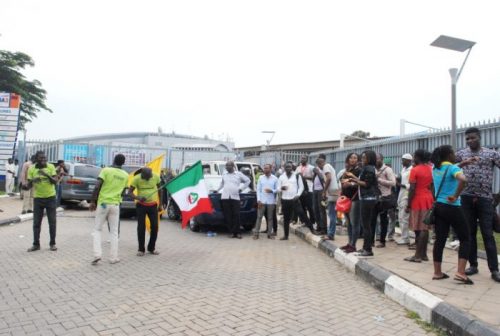
Concerns over perceived tribalism have emerged from the protesting of aviation unions against Nigerian airlines on August 11, 2026. The dispute has placed industrial relations, unionisation and the financial obligations of airlines under renewed scrutiny.
Speaking at the 30th annual conference of the League of Airport and Aviation Correspondents (LAAC) in Lagos, the Executive Chairman of United Nigeria Airlines, Prof. Obiora Okonkwo, alleged that Air Peace and United Nigeria were targeted during the protesting at Lagos and Abuja airports.
The LAAC conference, held under the theme, “Towards a Sustainable Aviation Industry: Balancing government revenue demands with sector growth”, brought together major stakeholders. However, Okonkwo said the union action risked creating an impression of ethnic or tribal targeting within the aviation sector.
Protesting Raised Tribalism Concerns
Prof. Okonkwo said the original plan was to target both Air Peace and United Nigeria Airlines. He argued that such an approach could have been perceived as a tribal conflict because of the ownership and identities associated with the two carriers.
“For those gathered here, let me be clear: the plan was to bring down Air Peace and United Nigeria. It was only at midnight that some inspiration came, and they realised that targeting both airlines might seem like a tribal war, that is why they backed down on United Nigeria, planning to target it the next day,” he said.
“Airlines are among Nigeria’s best-paying sectors. That shameful display at the airport would have brought us to our lowest point if not for the reactions and condemnation from so many gathered here,” Okonkwo said.
He specifically commended the Aviation Roundtable and Air Commodore Ademola Onitiju (Rtd) for speaking against the action. According to him, the response from industry stakeholders helped prevent the situation from escalating further.
ATSSSAN Rejects Conflict Narrative
However, the National President of the Air Transport Services Senior Staff Association of Nigeria (ATSSSAN), John Ogbe, rejected the suggestion that the unions’ activities were designed to disrupt the industry.
Ogbe said the unionisation drive was based on partnership and the need to strengthen industrial relations across Nigeria’s aviation sector. He maintained that workers should have the freedom to decide whether to join a union.
“Our effort is not to cause disruption but to collaborate as unions are social partners to airlines. The unions support any initiative that will create a financially robust industry, peaceful and safe aviation,” Ogbe said.
The ATSSSAN president also pointed to the Nigerian Constitution, the Trade Union Act and relevant International Labour Organisation (ILO) conventions. He said these frameworks protect the right of workers to make choices about union membership.
That position puts the two sides at the centre of a wider debate. While airline operators have raised concerns about disruption and business stability, unions insist that collective representation is essential for protecting workers’ interests.
TSC Dispute Behind August Protesting
The disagreement also centres on the five per cent Ticket Sales Charge, which airlines are required to remit. According to Okonkwo, however, problems with TSC payments only became acute after airlines faced severe increases in operating costs.
He said aviation fuel prices rose to about N3,300 amid the US-Iran crisis. Consequently, airlines faced mounting financial pressure and sought temporary relief from regulatory charges.
“Before February this year, there were no payment problems. All airlines were paying. The TSC issue only became a problem because of the Gulf crisis. AON was the first to cry out,” Okonkwo said.
According to the United Nigeria chairman, the AON wrote to the President requesting either a complete suspension or temporary relief from regulatory charges. He said the Federal Government subsequently approved a 30 per cent waiver.
Following that decision, Okonkwo said airlines met with the Nigerian Civil Aviation Authority (NCAA) and the Minister of Aviation and Aerospace Development to agree on a repayment structure.
He said the NCAA requested that operators pay 10 per cent of their legacy debts within a specified period. The remaining balance would then be settled through instalments agreed with the regulator.
Okonkwo said airlines complied with the arrangement and developed payment plans with the NCAA’s finance officials. He therefore questioned why the labour dispute emerged while operators were making payments under the agreed framework.
Airlines, Unions Face Need for Collaboration
The August 11 protesting has therefore exposed a difficult balance between workers’ rights and airline survival. Both sides have presented competing explanations for the confrontation, while passengers and other aviation businesses remain affected by industrial instability.
More than 70 flights were reportedly disrupted last month when NUATE and ATSSSAN picketed Air Peace at the Murtala Muhammed International Airport in Lagos and the Nnamdi Azikiwe International Airport in Abuja.
The unions accused the AON of failing to remit the five per cent TSC. They also alleged that some airlines had prevented their employees from joining unions.
The controversy surrounding the August 11 protesting also shows why stakeholders must carefully manage the language used during aviation disputes.