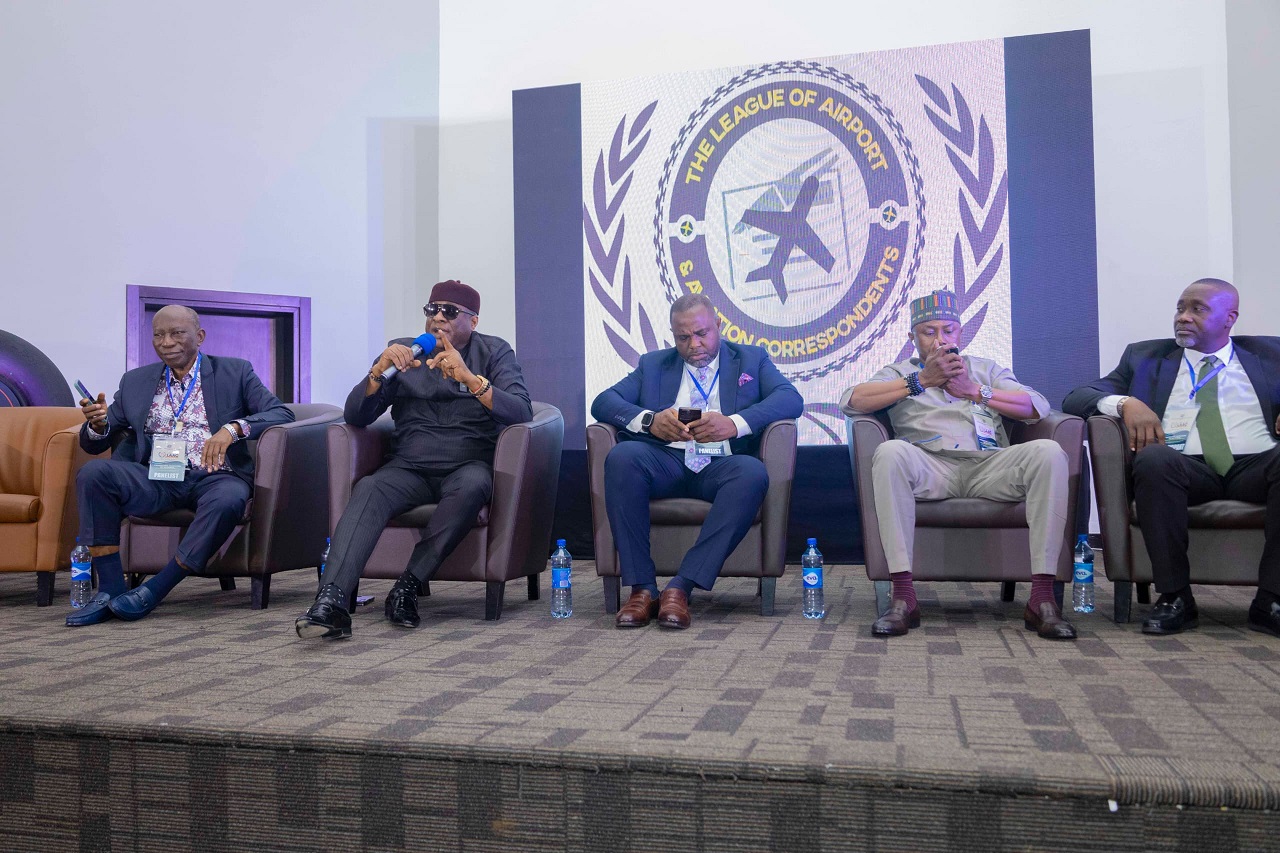

The 30th Annual Conference of the League of Airport and Aviation Correspondents (LAAC) will focus on how Nigeria can balance government revenue demands with sustainable aviation growth.
Scheduled for September 10, 2026, in Lagos, the landmark LAAC conference will bring together policymakers, regulators, airline operators, airport managers, investors, financial institutions, aviation professionals and other industry stakeholders.

The conference will be held under the theme, “Towards a Sustainable Aviation Industry: Balancing Government Revenue Demands with Sector Growth.” The theme reflects growing concerns over the financial pressures facing aviation businesses and the need for policies that support investment, competitiveness and consumer affordability.
The 30th edition is expected to provide a major platform for examining how government can generate legitimate revenue from aviation without placing excessive financial burdens on operators. Meanwhile, stakeholders will consider how the industry can expand its contribution to the Nigerian economy despite persistent operational and financial challenges.
LAAC conference to examine aviation’s revenue-growth dilemma
A statement by the conference committee said the theme was informed by the need to address fiscal pressures confronting the aviation industry while protecting the viability of airlines and other aviation businesses.
The committee noted that Nigeria’s aviation sector is undergoing significant reforms and infrastructure development. However, it said sustainable growth would require a careful balance between government revenue generation and an enabling environment for investment, business expansion and affordable air travel.
“At a time when the Nigerian aviation sector is undergoing significant reforms and infrastructure development, stakeholders believe that achieving a sustainable industry requires a careful balance between revenue generation by government and the creation of an enabling environment for investment, business growth and consumer affordability,” the statement said.
The LAAC conference will therefore examine the financial pressures created by multiple charges imposed on airlines and other operators. It will also consider the impact of aviation fuel costs, foreign exchange access, aircraft acquisition and maintenance expenses.
Airport infrastructure and regulatory effectiveness will also form part of the broader discussion. In addition, participants will examine aviation’s wider economic contribution and how policy decisions can either strengthen or constrain that contribution.
The issues are particularly important for airlines operating in a market where high operating costs can affect fares, connectivity and fleet expansion. Therefore, the conference is expected to explore practical approaches that can support both public revenue objectives and private-sector sustainability.
Expanding aviation revenue beyond existing charges
A major question before the LAAC conference will be whether Nigeria can increase aviation-related revenue without relying excessively on charges imposed directly on operators.
The LAAC conference is expected to explore opportunities for expanding the sector’s revenue base through higher passenger traffic, stronger cargo operations and tourism development. Airport commercialisation, maintenance, repair and overhaul (MRO), aircraft leasing and other emerging segments will also receive attention.
Such opportunities could provide alternative sources of economic value while reducing pressure on airlines and other operators. Increased passenger numbers, for example, could broaden revenue across airports, airlines, tourism businesses and associated service providers.
Cargo development could also create significant opportunities for Nigeria. A stronger air cargo ecosystem could support trade, agriculture, manufacturing and logistics while increasing the commercial value of airport infrastructure.
Chairman of the League of Airport and Aviation Correspondents, Suleiman Idris, described the 30th anniversary conference as an important milestone for the association.
He said the event would provide an opportunity for aviation media to facilitate constructive dialogue on issues critical to the industry’s future.
“The aviation industry cannot grow sustainably if the operators are overburdened, just as government cannot abandon its legitimate responsibility to generate revenue. What is required is a balanced and sustainable framework that allows government to earn revenue while giving aviation businesses sufficient room to grow, invest and remain competitive,” Idris said.
Chairman of the conference committee, Wole Shadare, said the 30th edition would seek to move the conversation beyond identifying problems.
He said the forum would focus on developing practical recommendations capable of supporting policy formulation and implementation. This approach is expected to give the conference greater relevance beyond the event itself.
The anniversary therefore gives the LAAC conference a significance beyond its central theme.
A wider conversation on Nigeria’s aviation future
The LAAC conference is expected to bring together major stakeholders across the aviation value chain, including Minister of Aviation and Aerospace Development, Festus Keyamo (SAN), alongside government officials, regulators, airline operators, airport managers, investors and aviation professionals.
Labour unions, financial institutions and other industry players are also expected to participate in the discussions.
Their involvement could help broaden the debate beyond government and airline interests. Aviation is an interconnected ecosystem, and decisions affecting one part of the value chain can quickly influence other segments.
This interconnected relationship makes the central theme of the 30th LAAC conference particularly significant.
The association expressed optimism that the 30th Annual Conference would produce robust recommendations capable of contributing to a more competitive, financially sustainable and resilient Nigerian aviation industry.