

ANTHONY OMOH examines the battle over TSC funding, weighing the competing positions of NAMA, NCAA, airlines and unions as lawmakers consider the future of aviation financing.
As lawmakers consider the future of TSC funding, Nigeria’s aviation industry has become the centre of an intense and increasingly cacophonous battle involving regulators, service providers, airlines and organised labour, with competing proposals and a looming union threat over remittances raising the stakes for the sector.
At the heart of the debate is the five per cent Ticket Sales Charge (TSC) and Cargo Sales Charge (CSC), a statutory levy collected by the Nigerian Civil Aviation Authority (NCAA) and shared among key aviation agencies. While all stakeholders agree that the agencies require sustainable funding to discharge their responsibilities, they disagree sharply on how the money should be distributed, whether the current model should exist at all and how outstanding collections should be remitted.
The current statutory formula allocates 56 per cent of the fund to the NCAA, 22 per cent to the Nigerian Airspace Management Agency (NAMA), nine per cent to the Nigerian Meteorological Agency (NiMet), while the Nigerian College of Aviation Technology (NCAT) and the Nigerian Safety Investigation Bureau (NSIB) receive the balance under existing provisions.
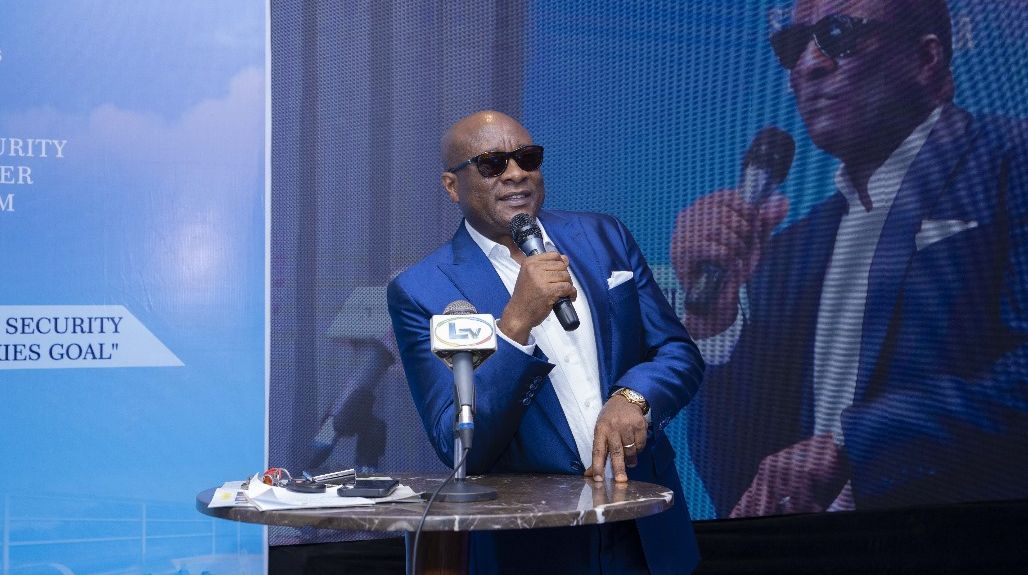
The debate unfolded during a public hearing organised by the House of Representatives Committee on Aviation on proposed amendments to the statutory sharing formula for the TSC and CSC.
For passengers, the charge is largely invisible. It is embedded in ticket sales and cargo transactions. For aviation agencies, however, it represents one of the industry’s most important funding mechanisms, supporting regulatory oversight, air navigation, weather services, accident investigation and aviation training.

NAMA Wants a Bigger Share
At the centre of the TSC funding debate is NAMA’s proposal that its share of the statutory pool should increase from 22 per cent to 56 per cent, with Managing Director Engr. Farouk Ahmed Umar arguing that the existing formula no longer reflects the Agency’s growing responsibilities.READ MORE ON NAMA’S PROPOSAL:Aviation Height Clearance: NAMA Seeks 90% Fee Share, 56% TSC Allocation
Umar told lawmakers the proposal would not increase what passengers pay but would simply redistribute the existing five per cent Ticket Sales Charge.
“Today NAMA receives 22 per cent of the five per cent statutory pool,” he said.
“On every ₦1,000 of qualifying ticket, charter or cargo sales, the five per cent charge produces ₦50. NAMA receives ₦11 from that ₦50.”
According to him, increasing NAMA’s allocation would raise its share to ₦28 from the same ₦50 collected without imposing any additional charge on passengers.
Umar argued that TSC funding should better reflect the realities of maintaining Nigeria’s air navigation infrastructure. He said NAMA’s expenditure exceeded ₦43 billion in 2023, while the Agency continues to bear rising costs for radar systems, communications, surveillance, navigation aids, software, calibration and specialist personnel.
Beyond TSC funding, NAMA also proposed that it should receive 90 per cent of Aviation Height Clearance (AHC) technical fees, arguing that although NCAA issues AHC certificates, NAMA performs the technical work, including obstacle surveys, WGS-84 validation and procedure-impact assessments.
“We are therefore recommending a sharing formula of 90 per cent to 10 per cent in favour of NAMA,” Umar said.
NCAA Defends Existing TSC Funding Model
The NCAA, however, urged lawmakers to reject the proposal, insisting the debate should focus on preserving Nigeria’s safety oversight system rather than simply reallocating TSC funding.
Director General Capt. Chris Najomo stressed that the Authority was not opposing adequate funding for NAMA but protecting the financial independence of the country’s aviation regulator.

Najomo argued that unlike NAMA, which provides operational services, NCAA performs sovereign regulatory functions and therefore requires stable statutory funding to oversee airlines, airports, maintenance organisations, training schools, personnel and even NAMA itself.
Effective regulation also requires the regulator to remain technically ahead of the organisations it supervises. As aviation technology, aircraft systems, air navigation, airport operations, cybersecurity and safety management continue to evolve, NCAA inspectors must receive continuous specialised training and recurrent certification to remain competent.
The Authority cannot effectively regulate NAMA, FAAN, airlines and other highly specialised service providers if its technical personnel are not advancing at the same pace, or preferably ahead, of those they oversee. Regulatory competence must therefore be continuously strengthened through advanced training, technical exposure, modern equipment and professional development.
This makes training a core safety requirement rather than a discretionary expenditure. The regulator must understand emerging technologies, operational risks and international standards deeply enough to challenge, inspect and certify sophisticated service providers. Any funding framework that constrains this continuous advancement could ultimately weaken the quality and independence of Nigeria’s safety oversight system.ALSO READ NCAA’S RESPONSE: NCAA Says NAMA Has 16 Income Sources, Opposes TSC Review
Najomo maintained that even allocating the entire TSC to NAMA would not solve its funding challenges.
“In stark contrast, the five per cent TSC is the lifeline of the NCAA, representing approximately 83 per cent of its funds.”
Airlines Want the TSC Funding System Scrapped
Unlike NAMA and NCAA, the Airline Operators of Nigeria (AON) argued that the entire TSC funding model should be abolished.
Represented by former NAMA Managing Director Capt. Roland Iyayi, the association said the percentage-based charge has become unsustainable for domestic airlines facing soaring fuel prices, inflation and foreign exchange pressures.
“The five per cent service charge has outlived its usefulness. It has become a burden on domestic airlines,” Iyayi said.
Instead of redistributing TSC funding, AON proposed replacing it with a flat Passenger Service Charge similar to the model used by the Federal Airports Authority of Nigeria.
According to Iyayi, charging a fixed amount per passenger would create a level playing field because airlines would no longer surrender a percentage of every ticket sold regardless of operating costs.
He linked the proposal directly to the industry’s financial realities, noting that aviation fuel now accounts for about 40 per cent of airline operating costs.
“Since March, domestic airlines have not been able to pay the five per cent to the NCAA,” he said.
“We have managed to remit only because domestic airlines are now taking on charter flights rather than continuing scheduled operations.”
When a Funding Dispute Becomes an Industry Crisis
The TSC funding debate has entered a more volatile phase with aviation unions threatening to picket airlines over the alleged non-remittance of Ticket Sales Charge collections. The development adds an industrial relations dimension to what had previously been a policy debate before the National Assembly, raising the possibility that disagreements over aviation financing could spill into operational disruption.
The unions argue that airlines merely collect the TSC on behalf of government agencies and should remit it promptly. In their view, delayed TSC funding deprives agencies of resources needed for safety oversight, air navigation, weather forecasting and accident investigation, ultimately weakening their ability to perform critical statutory functions.
The Airline Operators of Nigeria (AON), however, insists the issue is more complex than non-remittance. Linking its position to the severe financial pressures confronting domestic carriers, the association said soaring aviation fuel prices, foreign exchange volatility and inflation have significantly eroded airline revenues.
The involvement of organised labour significantly raises the stakes. If unions proceed with picketing and airlines respond by reducing or suspending operations, the industry could face flight cancellations, passenger disruption, cargo delays and revenue losses across the aviation value chain.
Ironically, fewer flights would also reduce TSC funding collections, worsening the financial pressures facing the very agencies at the centre of the dispute.
The timing further complicates matters. While the National Assembly considers NAMA’s call for a larger share from the TSC funding, NCAA’s defence of the current funding philosophy and AON’s proposal to replace the system altogether, unions are demanding immediate remittance of outstanding collections. Although related, the issues of allocation, funding reform and remittance are distinct and may require different policy responses.
An Aviation Development Fund
Beyond replacing the TSC, the airlines also proposed a broader restructuring of aviation financing.READ:AON Pushes Aviation Development Fund, Seeks End to 25% TSA Deduction
AON suggested that aviation-generated revenues currently remitted into the Consolidated Revenue Fund through the Treasury Single Account should instead be pooled into a dedicated Aviation Development Fund.
The association argued that such a fund would provide a more sustainable mechanism for financing aviation infrastructure and institutional development while allowing resources to be allocated where they are most needed.
Despite their differences, NAMA, NCAA and the Airline Operators of Nigeria (AON) agree on one point: Nigeria’s aviation industry requires a more sustainable TSC funding framework.
The Bigger Test for Lawmakers
The House of Representatives Committee on Aviation must now decide whether the current TSC funding model should be retained, amended or fundamentally restructured.
Beyond the competing proposals, lawmakers may still seek stronger evidence to justify NAMA’s proposed increase to 56 per cent, the basis for its proposed 90:10 AHC revenue split and the long-term impact of any reduction in NCAA’s funding. They must also assess whether AON’s proposed replacement model can generate stable revenue without compromising aviation safety.
The debate has become even more urgent with aviation unions threatening industrial action over alleged non-remittance of TSC collections. Any disruption to flight operations could reduce TSC funding itself while affecting passengers, airlines and aviation agencies alike.
Ultimately, lawmakers are deciding more than percentages. Their decision will shape how Nigeria finances aviation safety, regulation and air navigation for years to come.