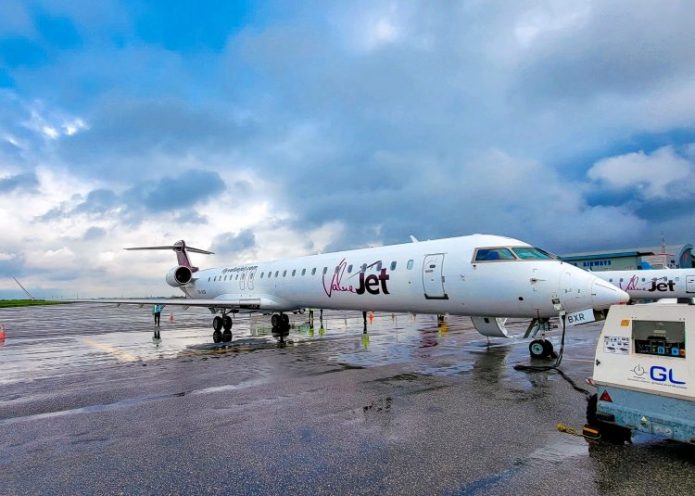


United Nigeria Airlines has unveiled an ambitious Fleet Increase plan that will see eleven additional aircraft join its operations before the end of the second quarter of 2026. The announcement was made during its 5th Anniversary Press Conference in Lagos. The Fleet Increase plan forms the centrepiece of the carrier’s expansion strategy into regional and intercontinental markets.
Chairman, United Nigeria Airlines, Professor Obiora Okonkwo, described the development as a defining moment in the airline’s journey from modest beginnings to structured growth.
“Five years ago, this dream began as a vision. Today, it is a reality that we can all be proud of,” he said. “The next five years will demand courage, innovation and dedication, but I am confident that together, we will soar even higher.”
From launching in February 2021 with four narrow-body aircraft on the Lagos-Enugu route, the airline now operates ten aircraft and connects sixteen Nigerian cities. In addition, it has extended services to Accra, Ghana. However, Professor Okonkwo emphasised that the new Fleet Increase plan will redefine the airline’s scale and competitive positioning.
Fleet Increase Plan Anchored on 737-800NG Expansion
Under the Fleet Increase plan, the airline has acquired six Boeing 737-800 Next Generation aircraft from Southwest Aviation. Furthermore, negotiations are being finalised for three additional aircraft of the same type. Deliveries will begin in March 2026, when the first two aircraft arrive, with all expected before the end of the second quarter.
“To add to our existing ten aircraft in our Opspec as at today, we have acquired six Boeing 737-800 NG and are finalising negotiations for additional three of the same type,” Professor Okonkwo disclosed. “Deliveries will begin in March 2026.”
The Boeing 737-800NG is recognised for fuel efficiency and operational reliability. Therefore, aviation analysts believe the Fleet Increase plan will strengthen schedule integrity and reduce operational costs through fleet commonality. Increased capacity will also improve domestic frequencies and support new African routes.
Beyond narrow-body growth, the Fleet Increase plan extends into wide-body operations. The airline has leased two Airbus A330-200 aircraft from Anka Aviation in Turkey to support intercontinental services. The first aircraft will arrive on 26 July 2026, while the second is expected between July and October.
“We have leased two A330-200 wide-body aircraft to support our international operations,” he confirmed. “The first delivery is expected on the 26th of July 2026.”
Planned long-haul destinations include Dubai, Jeddah, Rome, New York and the United Kingdom, subject to regulatory approvals from authorities such as the Nigerian Civil Aviation Authority (NCAA), which oversees airline certification and safety compliance.
Professor Okonkwo stated, “Our ambition is clear: to transform United Nigeria Airlines from a leading national carrier into a recognised continental aviation powerhouse.”
Meanwhile, the Fleet Increase plan will support six additional regional and continental destinations before the end of the second quarter of 2026. Proposed cities include Dakar, Monrovia and Johannesburg. The Chairman explained that deeper African connectivity remains essential to sustainable expansion.
The Fleet Increase plan also aligns with broader industry reforms and regional integration objectives.
In addition to aircraft acquisition, the airline is laying technical foundations for long-term sustainability. Professor Okonkwo revealed that United Nigeria has migrated from equivalent maintenance systems to an Approved Maintenance Organisation structure. This transition serves as a precursor to establishing a Maintenance, Repair and Overhaul facility within three years.
“We have migrated from equivalent maintenance systems to AMO as a prelude to our MRO within the next three years,” he stated.
Industry experts note that a local MRO could reduce foreign exchange outflows currently spent on overseas heavy maintenance. However, sustainability will depend on fleet numbers and third-party patronage. The Fleet Increase plan therefore provides the operational base necessary to justify such technical investment.
Reflecting on the airline’s journey, Professor Okonkwo acknowledged the challenges faced since inception.
“Nigeria’s aviation environment is complex from COVID-19 era shutdowns to regulatory hurdles, currency volatility and infrastructure constraints,” he said. “Yet, each challenge strengthened our resolve and sharpened our focus.”
Within five years, the airline became a member of the International Air Transport Association (IATA) and achieved IOSA certification within two years of operations milestones the Chairman described as evidence of global safety standards.
“We have carried millions of passengers safely and earned the trust of the Nigerian public and international partners,” he added.
Beyond commercial growth, the airline also unveiled initiatives such as “Harmony,” its inflight magazine, “Unity Rewards,” its loyalty programme, and the UNA Foundation focused on education, healthcare and aviation training.
Still, it is the scale of the expansion, fleet increase announcement that defines this anniversary milestone.
As Professor Okonkwo concluded: “As we celebrate our fifth anniversary, let us not only reflect on what we have achieved but embrace the limitless possibilities that lie ahead.”
As United Nigeria marks its anniversary, the Fleet Increase plan stands as its boldest strategic move yet. With eleven aircraft incoming, regional expansion underway and wide-body services planned, the airline appears determined to convert ambition into measurable growth across Africa and beyond.