

Munich Airport is taking a decisive step toward reshaping Africa’s airport management landscape through a strategic collaboration with a Nigerian consulting partner to launch a continent-focused Airport Business Executive Programme. The initiative positions Munich Airport as a key exporter of European airport business expertise, while responding directly to Africa’s growing demand for professionally run, commercially viable airport systems capable of competing globally.
Developed by Munich Airport International, a wholly owned subsidiary of Flughafen München GmbH, the programme is designed to combine executive workshops, targeted training and a structured peer-review and benchmarking forum. It is modelled partly on the Nigeria Airport Business Summit and aims to provide African airport managers with practical exposure to how successful European airports operate as integrated business ecosystems rather than mere transport infrastructure.

At the core of the programme is the belief that African airports must evolve into commercially driven hubs that support connectivity, trade and regional integration. Munich Airport brings decades of experience in airport development, terminal operations and master planning, offering African participants insight into how global airports scale sustainably while balancing regulation, safety and profitability.
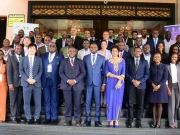
This collaboration deepened at the end of January 2026 when Nigerian stakeholders from the Nigerian Civil Aviation Authority, the Nigerian Airspace Management Agency and the Federal Ministry of Aviation and Aerospace visited Munich Airport International. Coordinated by FCI International Ltd, the visit focused on beyond visual line of sight operations, regulatory frameworks and future unmanned aviation use cases. Experts from Germany and Nigeria used the engagement to align shared objectives and explore pathways for safe, scalable unmanned aviation systems within evolving airspace environments.
Importantly, the initiative did not emerge in isolation. It builds on more than five years of structured engagement between Munich Airport International and Nigerian aviation stakeholders. Previous collaborations have covered airside management, terminal operations, facility and maintenance management, as well as airport masterplanning, with delegates drawn from the Federal Airports Authority of Nigeria. These engagements laid the groundwork for a more formalised airport business leadership programme with continental reach.
According to Mr Fortune Idu, Managing Director of FCI International and Munich Airport International’s Nigerian partner, African airports and their stakeholders deserve practical access to global business corridors. He noted that information exchange alone is insufficient without a clear understanding of how such knowledge is applied in the global business environment. Munich Airport, he said, understands this dynamic and has demonstrated it consistently through its approach to partnership and capacity development.
In addition, FCI International’s membership of ACI Africa as a World Business Partner strengthens the programme’s institutional foundation. This linkage is expected to enhance collaboration across the African airport ecosystem while ensuring alignment with international best practice and modern airport business standards championed by bodies such as ICAO and IATA.
Munich Airport International has confirmed that further programmes are currently in development and are expected to commence later in the year in Germany. These sessions will focus on airport business development, commercial strategy and governance, equipping participants with the skills needed to transform airport management into a creative, lucrative and sustainable enterprise.
The timing of the initiative is particularly significant. Africa’s aviation sector is navigating the implications of the African Continental Free Trade Area, the Single African Air Transport Market and ongoing uncertainty around global travel protocols. These dynamics point to a future of increased airport utilisation and heightened competition, requiring African airports to be operationally efficient and commercially agile.
For more than three decades, Munich Airport has supported aviation development initiatives across emerging markets worldwide. This latest collaboration stands out as a win-win model that blends European operational excellence with African market realities. By anchoring the programme in partnership rather than prescription, Munich Airport is positioning itself as a long-term ally in Africa’s airport business transformation.