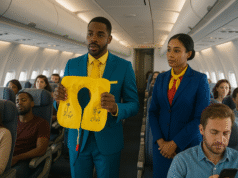
ANTHONY OMOH was at the 9th Cabin Crew Fair in Lagos, where aviation professionals reflected on the responsibilities behind the uniform, the importance of continuous learning and the value of a career that reaches far beyond the cabin. He writes:
There was something refreshing about bringing aviation professionals together away from the familiar routines of reporting for duty, conducting safety checks and preparing cabins for departure. At the 9th Cabin Crew Fair in Lagos on October 23, 2026, the conversation went beyond flying, service and glamour. It was about personal growth, professional pride and rediscovering the value of a career built around protecting lives.

Held under the theme “Redefining Cabin Crew Excellence: Safety, Professionalism and Career Growth in a Changing Aviation Industry,” the gathering brought together industry stakeholders, serving professionals and aspiring entrants. Through practical advice, reflections and memories, the speakers delivered a shared message: the uniform is only the visible part of a much bigger responsibility.
For Tolulope Dawodu, Organiser and Convener of the Cabin Crew Fair, the event provides a platform for learning, networking, mentorship and meaningful conversations. This year’s theme, she explained, reflects an industry continually reshaped by technology, changing passenger expectations and emerging safety challenges.
“Cabin crew is much more than a glamorous career,” Ms Dawodu said. “Behind the uniform lies a significant responsibility. Cabin crew members are safety professionals whose primary duty includes ensuring passenger safety, managing emergencies and contributing to the safe operation of every flight.”
Her message set the tone for a day of reflection on what it takes to build a lasting aviation career.
Cabin Crew Excellence Begins with Safety
For Olumide Ohunayo, General Secretary of the Aviation Safety Round Table Initiative (ASRTI) and first National President of the National Cabin Crew Association of Nigeria (NCCAN), excellence begins with understanding how much aviation has changed.
Delivering the keynote address, Mr Ohunayo identified four pillars of modern cabin crew excellence: safety and security leadership, elevated service and professionalism, continuous skill acquisition, and career expansion. His argument was straightforward. Professionals cannot depend solely on the knowledge acquired when they first entered the industry.
Aircraft technology evolves, operational expectations change and new challenges demand fresh thinking. Therefore, cabin crew members must remain alert to emerging risks, strengthen emergency response skills and maintain alignment with applicable aviation standards.
Mr Ohunayo advocated proactive risk management, effective de-escalation techniques and scenario-based emergency training. He also encouraged crew members to embrace digital tools, specialised certifications and opportunities for continuous learning.
His message extended beyond the immediate responsibilities of the cabin. Experience gained in flight can open doors to safety auditing, cabin safety instruction, crew management, aviation recruitment and customer experience design.
However, career progression requires deliberate preparation. Crew members must pursue additional qualifications, develop transferable skills and establish measurable career goals rather than wait for opportunities to appear.
As Mr Ohunayo stated in his presentation, “Cabin crew are the face, heart, and safety backbone of global airline brands.”
That responsibility demands technical competence, emotional intelligence and sound judgement. Exceptional service matters, but it must never compromise passenger safety.
Cabin Crew Professionals Must Never Stop Learning
Representing the Director of Operations, Licensing and Training Standards, Captain Donald Spiff, Chioma Osarun, General Manager of Examinations, brought the discussion closer to everyday operational realities.
Speaking to colleagues from different stages of their aviation careers, Ms Osarun delivered a reminder that left little room for complacency.
“We are working in an environment and in an industry that does not allow for mistakes,” she said. “And it definitely does not forgive mistakes. And so for us as cabin crew, our mantra should always be safety, safety, safety.”
Her words were a call for discipline rather than fear. As aircraft become more technologically advanced, training, safety standards and operating procedures must evolve accordingly.
However, she stressed that attending training programmes is not enough. Professionals must also change their attitudes and apply what they learn.
“If you go to the best schools, go to the best training organisations, and you don’t change your mindset, your paradigm shift doesn’t occur,” she said.
The distinction matters because procedures cannot protect passengers when crew members treat them as routine paperwork. Standard operating procedures must guide decisions consistently, especially when emergencies demand quick and disciplined responses.

From Left: Tayo Orisadare, MD, Chioma Usanga, representative of the Director, Operations, Licensing and Training Standards, NCAA, Hon
Festus Odianosen Ebea, commissioner for Public safety & Security, Edo state.
Ololade Adenekan-Odukoya, Aviation Professional at the event.
Ms Osarun also reminded cabin crew that security is not solely the responsibility of designated security personnel. Everyone has a role in identifying suspicious behaviour and reporting potential threats.
“You see something, you do what? You say something,” she told the audience.
Her message was a call for vigilance and professional courage. In aviation, silence can become dangerous when speaking up could prevent an incident.
Professionalism, she added, begins before a crew member enters the cabin. Appearance, grooming, uniform standards and conduct influence the impression passengers form of an airline.
“You are the face of your airlines,” she said. “Therefore, anytime you are on duty, you must tell yourself, I must do what? On my best game.”
Yet her advice went beyond appearance. She challenged crew members to examine their progress and contribution to aviation over time.
“Ten years from now, you look back and say, have I grown from that ab initio cabin crew? Have I grown? Have I learned? Or have I also contributed to the growth of aviation?”
It was a question every professional could take home. Years of service matter, but learning, improvement and contribution matter just as much.
Cabin Crew Must Recognise Their Own Worth
Perhaps one of the day’s most memorable perspectives came from Sidi Bernard, the 77-year-old veteran who proudly referred to herself as an air hostess.
Her contribution was less a technical lecture than a reflection on identity, dignity and the many responsibilities carried by cabin crew. Speaking from experience, she recalled how the profession shaped her personal development, teaching her deportment, confidence and the importance of presentation.
“I came in as a girl. I came in as a… I learned how to be a lady in the job,” she recalled.
“They taught you how to walk, right? Taught you how to sit, how to behave, right? They taught you how to be a woman. I became a woman.”
Her recollection offered a glimpse into an earlier era of cabin crew training, when deportment and personal presentation featured prominently in professional preparation. Yet her broader lesson remains relevant: confidence and self-respect should accompany technical competence.
“You know, you are a lady. I usually tell you, because you are a lady, wherever you enter, everybody will want to see you,” she said.
She encouraged younger professionals to recognise their worth rather than measure success solely through earnings or comparisons with others. Her advice was simple, personal and delivered with the conviction of someone who had watched generations enter the profession.
“Don’t look down on yourself,” she said. “Forget about how you’re collecting 100 million at a time. Your own 10,000 will take you somewhere.”
Her point was not to dismiss the importance of fair remuneration. Instead, she urged crew members to value their individual journeys, make the most of their opportunities and avoid allowing comparison to undermine their confidence.
“Know yourself and take care of yourself. Be good to you,” she urged.
She also reminded the audience that cabin crew responsibilities extend well beyond serving refreshments. Professionals must be prepared to assist during medical emergencies, respond to incapacitation and help maintain cabin safety.
Her examples reinforced the central message of the fair: beneath the familiar routines of cabin service lies a demanding role requiring adaptability, composure and a broad range of skills.
For aspiring entrants, her story demonstrated how a career can shape personal development. For experienced crew, it offered an invitation to rediscover the confidence and pride that first drew them to aviation.
Cabin Crew Career Growth Requires Mentorship and Connection
For Ms Dawodu, the Cabin Crew Fair must become more than an annual gathering. Her vision is to build lasting professional relationships, strengthen mentorship and contribute to a more competent and empowered cabin crew community.
She emphasised that aspiring crew members should look beyond the uniform and understand the preparation required to succeed. Serving professionals, meanwhile, must remain teachable, embrace change and uphold high safety standards.
The speakers’ advice also highlighted the balance between technical competence and people skills. Emotional intelligence, clear communication, cultural awareness and the ability to calm difficult situations remain essential to the passenger experience.
Meanwhile, Mr Ohunayo’s presentation encouraged crew members to consider career opportunities beyond the cabin. With additional training and deliberate planning, their experience can provide a foundation for instruction, management, auditing and other aviation careers.
Ultimately, professional development is not a destination reached after a particular number of flying hours or years of service. It is a continuing process of learning, reflection and taking responsibility for one’s future.
Ms Dawodu urged participants to engage actively, ask questions, share experiences and build connections. The aim is to ensure the fair inspires positive change long after the presentations end.
Beyond the Uniform, One Aviation Community
As the formal sessions gave way to intermingling, the atmosphere shifted from presentations to conversations. Crew members and aviation professionals from ValueJet, Aero Contractors, United Nigeria Airlines, Ibom Air, Air Peace, Enugu Air and Green Africa Airways were visibly represented at the fair.
The gathering offered an opportunity to reconnect with colleagues, exchange experiences and build relationships across airline boundaries. In the spirit of camaraderie, professionals from different operators shared the space as members of a wider aviation community.
Perhaps that was the most fitting conclusion to a day centred on growth. Airlines may carry different colours and maintain distinct service cultures, but the responsibility behind the uniform remains remarkably similar.
For cabin crew professionals, the journey is about much more than looking the part. It is about being prepared, protecting lives, treating people with dignity and continuing to learn.
The uniform may introduce you to the world. What you learn, how you behave and the care you show others will help determine how far you go.