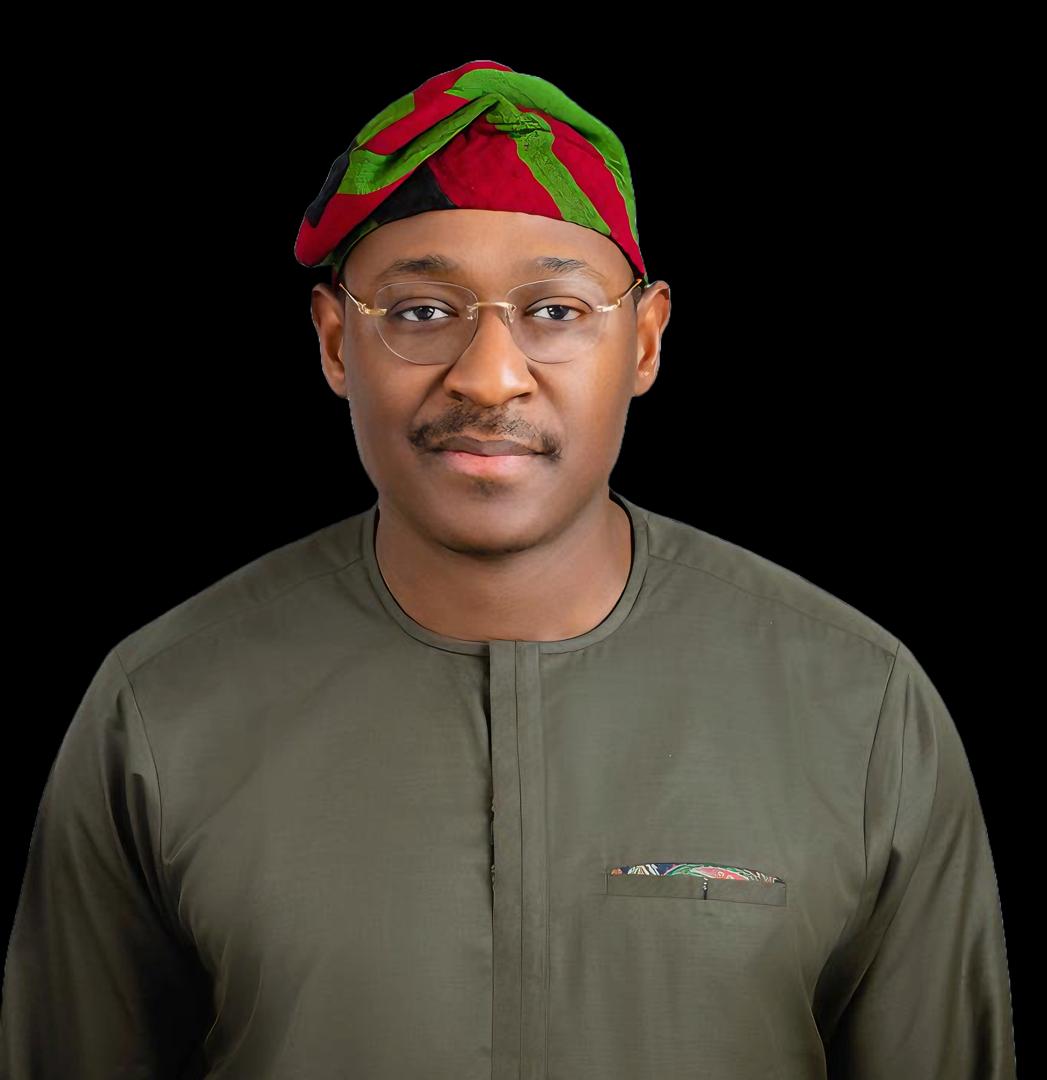


AI-Controlled Skies: The Future?
Former Director-General of the Nigeria Civil Aviation Authority, Capt. Musa Nuhu, says the aviation industry is entering an era of “AI-controlled skies,” where autonomous systems will increasingly manage airspace operations, logistics and passenger mobility.
Delivering his paper at DRONETECX 2026, Capt. Nuhu said the shift toward AI-controlled skies is being driven by artificial intelligence, autonomous drones and digital airspace ecosystems. His presentation focused on how drones, Artificial Intelligence and autonomous systems are rapidly transforming global civil aviation.

According to him, the future of aviation will rely heavily on intelligent digital systems instead of traditional human-controlled operations.
“The future of aviation will not only be piloted by humans; in the emerging AI-controlled skies, aviation will be coordinated by intelligent autonomous systems,” he said.
The phrase “AI-controlled skies” became the dominant theme throughout the presentation. He repeatedly stressed that autonomous aviation systems are no longer futuristic concepts but fast-emerging operational realities.
Capt. Nuhu explained that the global UAV industry has evolved far beyond surveillance and recreational activities. He said drones are now becoming critical tools for healthcare delivery, infrastructure inspection, agriculture, logistics and urban transportation systems.
“The UAV industry is no longer an emerging sector; it is becoming a central pillar of next-generation civil aviation,” he declared.
He noted that advances in AI, edge computing, autonomous navigation and battery technology are accelerating the transition toward AI-controlled skies globally.
Meanwhile, Capt. Nuhu warned that aviation regulators must move quickly to keep pace with technological developments. He said regulatory systems in many countries are evolving slower than drone technologies.
“The challenge before regulators, operators and policymakers is not whether UAVs will transform aviation, but how safely, sustainably and inclusively this transformation can occur,” he said.
According to him, countries that delay policy reforms may struggle to compete in the future digital aviation economy.
A major highlight of the presentation was Beyond Visual Line of Sight operations. Capt. Nuhu described BVLOS as the most significant breakthrough in commercial drone deployment.
He explained that BVLOS systems allow drones to travel long distances without direct visual contact from operators. This capability supports medical deliveries, infrastructure inspections and maritime monitoring.
“BVLOS enables long-distance logistics, infrastructure corridor inspection, persistent surveillance, maritime monitoring and automated aerial mobility,” he explained.
Capt. Nuhu further stated that AI-controlled skies would depend heavily on advanced Unmanned Traffic Management systems. These digital systems are expected to coordinate both manned and unmanned aircraft within shared airspace.
He noted that AI-controlled skies will depend heavily on Unmanned Traffic Management systems that integrate both manned and unmanned aircraft in shared airspace.
These systems will handle drone registration, geofencing, remote identification, traffic separation, dynamic flight authorization and airspace conflict management.
He added that traditional air traffic systems must evolve into digitally connected ecosystems capable of handling thousands of autonomous aerial movements simultaneously.
In addition, Capt. Nuhu highlighted the growing role of artificial intelligence in drone operations. He explained that AI now powers autonomous flight planning, obstacle avoidance and adaptive route management.
“AI now enables autonomous flight planning, obstacle avoidance, collision prediction, adaptive routing, automated decision-making and real-time operational analytics,” he said.
He noted that many modern drones already depend on machine learning systems and neural processing technologies for complex operations.
The presentation also examined how AI-controlled skies could transform healthcare logistics across Africa. Capt. Nuhu referenced global drone delivery systems already transporting blood products, vaccines and medical supplies to remote communities.
“The emergence of Drone-as-a-Service models is accelerating last-mile delivery systems in underserved regions,” he explained.
According to him, drone logistics can reduce emergency response times, improve healthcare access and lower transportation costs significantly.
Beyond healthcare, Capt. Nuhu identified infrastructure inspection as another major growth area for drone technology. He said drones are increasingly inspecting airports, oil pipelines, bridges, rail corridors and telecommunications towers.
“The deployment of LiDAR, thermal imaging, hyperspectral sensors and digital twins allows infrastructure operators to perform predictive maintenance while reducing human exposure to hazardous environments,” he stated.
Agriculture also featured prominently during the presentation. Capt. Nuhu explained that AI-powered drones are changing food production through crop monitoring, irrigation analysis and precision spraying.
“AI-powered agricultural UAVs are increasingly referred to as flying intelligent tractors,” he said.
He explained that these systems reduce chemical waste, water usage and operational costs while improving environmental sustainability.
Capt. Nuhu also discussed Urban Air Mobility and electric vertical take-off and landing aircraft, commonly called eVTOL systems. He described Urban Air Mobility as the convergence of aviation, AI, electrification and smart-city systems.
According to him, eVTOL aircraft are already being developed for passenger transportation, emergency evacuation and cargo mobility.
“International regulators are currently developing certification frameworks for Advanced Air Mobility,” he noted.
However, the former NCAA Director-General warned that AI-controlled skies also introduce major security concerns. He identified cybersecurity attacks, GPS spoofing and communication interference as serious emerging threats.
“Despite its enormous benefits, UAV integration presents significant risks,” he warned.
He stressed that governments must invest heavily in cybersecurity protection as aviation systems become more autonomous and digitally connected.
Capt. Nuhu also warned about increasing low-altitude airspace congestion caused by rising drone operations worldwide.
“The proliferation of low-altitude drone operations increases risks of collision, airspace conflicts and operational interference with manned aviation,” he explained.
Privacy concerns were another major issue raised during the presentation. He said facial recognition systems and drone-enabled surveillance technologies continue to generate global debate around data protection and unauthorized monitoring.
To address these concerns, Capt. Nuhu called for stronger counter-drone systems and national drone security frameworks.
“The rise of hostile or unauthorized drones has accelerated the deployment of drone detection radar, RF jamming systems, kinetic interception systems and AI-enabled drone threat analytics,” he said.
Capt. Nuhu also reflected on Nigeria’s role in early global drone regulation discussions. He recalled that Nigeria hosted one of the first ICAO RPAS symposiums in 2017.
“Nigeria hosted one of the first ICAO RPAS Symposiums in July 2017 when I was serving as the Representative of Nigeria on the Council of ICAO,” he recalled.
He further revealed that he played a major role in developing Nigeria’s RPAS regulatory framework during his tenure as NCAA Director-General.
Looking ahead, Capt. Nuhu said Africa possesses enormous opportunities within the global UAV industry because of healthcare gaps, infrastructure limitations and expanding agricultural activities.
“For Africa and Nigeria in particular, UAV technologies present a historic opportunity to leapfrog traditional infrastructure limitations and establish globally competitive aviation innovation ecosystems,” he declared.
He recommended accelerated Beyond Visual Line of Sight (BVLOS) regulations, indigenous drone manufacturing, drone corridors and expanded AI-focused aviation education across Nigeria.
Capt. Nuhu also called for stronger investment in aviation robotics, data science and autonomous systems research to prepare the country for AI-controlled skies.
In his closing remarks, he praised the current NCAA management for adapting to developments within the drone sector.
“UAS, the fiction of yesterday, have become the reality of today and the future of aviation,” he concluded.